





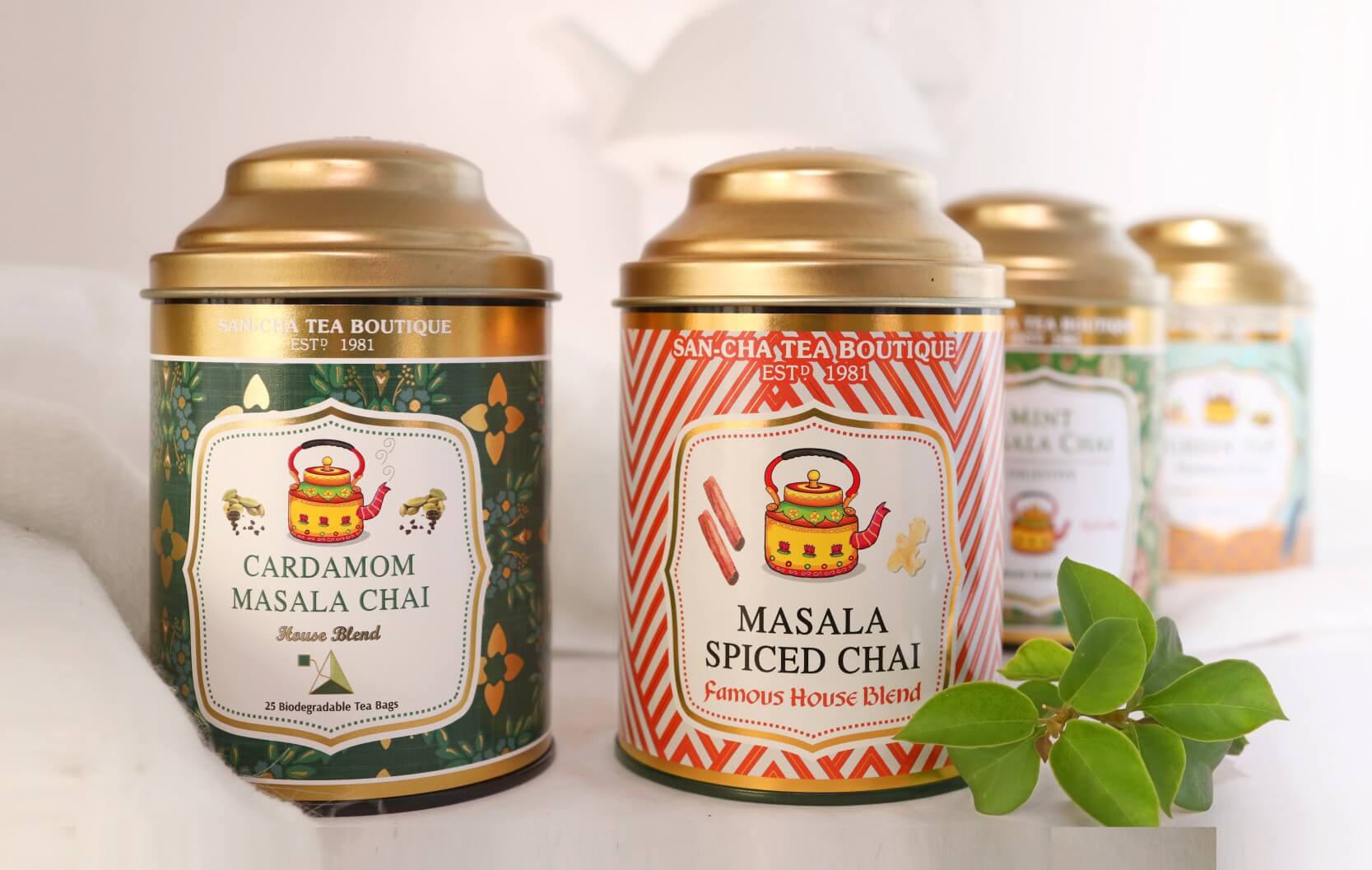



Oolong tea occupies a fascinating place in the world of tea.
It sits between green tea and black tea — not because it is a simple blend of the two, but because of the way the leaves are processed. Partially oxidised, Oolong teas can range from delicate and floral to creamy, fruity, honeyed, toasted and deeply aromatic.
For tea lovers, Oolong offers an extraordinary diversity of flavour.
For those interested in wellness, it has also attracted attention for its relationship with metabolism, energy expenditure and fat oxidation.
At SAN-CHA Tea Boutique, we believe that wellness and great taste do not have to be separate. Our extensive Oolong Tea Collection brings together 14 varieties and Oolong-focused gift collections, offering everything from classic Chinese Oolongs and Himalayan harvests to fruity and floral interpretations.
Explore SAN-CHA's Oolong Tea Collection
What Exactly Is Oolong Tea?
Oolong is a traditional tea made from the leaves of the Camellia sinensis plant — the same plant used to make green, white and black tea.
What makes Oolong different is oxidation.
Green tea is generally minimally oxidised, while black tea is fully oxidised. Oolong sits between the two, undergoing partial oxidation before being shaped, fired and finished.
This gives Oolong its distinctive character.
Depending on the variety and processing style, an Oolong can be:
- Light and floral
- Fresh and grassy
- Creamy and buttery
- Fruity and sweet
- Honeyed and aromatic
- Toasty and nutty
- Roasted and earthy
This enormous range is one of the reasons Oolong has become a favourite among tea connoisseurs.
And it is also why there is no single "Oolong flavour."
How Is Oolong Tea Made?
The journey from fresh tea leaf to Oolong involves careful control of oxidation and heat.
Freshly harvested leaves are allowed to wither, which reduces their moisture and begins developing their aroma. The leaves are then gently bruised or agitated to encourage oxidation.
Unlike green tea, where oxidation is minimised, or black tea, where oxidation is allowed to progress much further, Oolong is stopped at a particular stage.
The leaves are then heated or fired to halt further oxidation and lock in the desired character.
Small changes in processing can create dramatically different teas.
This is why a floral Tie Guan Yin can taste completely different from a roasted Wu Yi Oolong — even though both belong to the same tea family.
Oolong Tea vs Green Tea vs Black Tea
The easiest way to understand Oolong is to see it as part of a spectrum.
| Tea | Oxidation | Typical Character |
|---|---|---|
| White Tea | Very low | Delicate, soft, floral |
| Green Tea | Low | Fresh, vegetal, bright |
| Oolong Tea | Partial | Floral, fruity, creamy, roasted or complex |
| Black Tea | High | Rich, malty, bold |
Oolong therefore offers something particularly interesting: complexity without necessarily having the intensity of a black tea or the vegetal character of some green teas.
Can Oolong Tea Help With Weight Management?
This is where Oolong tea gets particularly interesting.
Tea contains naturally occurring compounds including caffeine and polyphenols, which have been studied for their potential effects on energy metabolism and fat oxidation.
Research involving tea has found that certain combinations of tea catechins and caffeine can influence energy expenditure and fat oxidation. Oolong is among the teas studied in this context.
One controlled human study found that Oolong tea increased energy expenditure and fat oxidation over a short period compared with water. However, this was a small, short-term study, so it should not be interpreted as proof that drinking Oolong alone leads to significant long-term weight loss.
More recent research takes a similarly measured view: the metabolic potential of Oolong is promising, but human evidence remains less extensive and less standardised than the evidence available for green tea.
So, can Oolong be part of a weight-management lifestyle? Yes.
Can it replace a balanced diet, physical activity or professional weight-management advice? No.
That distinction is important.
How Oolong May Support a Healthy Lifestyle
Rather than thinking of Oolong as a "slimming tea," it is more useful to think of it as a low-calorie, naturally caffeinated beverage that can complement healthy habits.
1. It Contains Caffeine
Oolong naturally contains caffeine.
Caffeine is known to temporarily increase alertness and can influence energy expenditure. Research on tea suggests that caffeine, together with tea polyphenols, may contribute to modest effects on energy metabolism.
The exact caffeine content varies depending on the tea, leaf grade, quantity used and brewing method.
2. It May Influence Fat Oxidation
Some controlled research has found that Oolong consumption can increase fat oxidation.
A human crossover study found higher fat oxidation after Oolong consumption compared with water.
However, increased fat oxidation does not automatically translate into substantial weight loss. Weight management is influenced by overall calorie intake, activity, sleep, genetics and many other factors.
3. It Is Naturally Low in Calories
Unsweetened brewed tea is a naturally low-calorie drink.
This makes Oolong an excellent alternative to sugary beverages, sweetened iced teas and high-calorie drinks.
Replacing a calorie-dense beverage with unsweetened Oolong can therefore be a simple lifestyle choice for people trying to manage their overall energy intake.
4. It Can Become Part of a Daily Ritual
Perhaps one of the most overlooked benefits of tea is behavioural.
A cup of Oolong can replace an afternoon sugary drink, become part of a mindful morning routine or provide a naturally caffeinated alternative to another beverage.
Small, sustainable habits are often more useful than extreme approaches to weight management.
Oolong Tea Is Not a Miracle Weight-Loss Tea
This distinction is worth emphasising.
You will often see teas marketed as "fat-burning," "detox" or "slimming" products. The science is considerably more nuanced.
Current evidence does not support tea as a primary treatment for obesity, and the average effects seen in tea research tend to be modest.
At SAN-CHA, we prefer to celebrate Oolong for what it genuinely offers:
Wonderful flavour, natural tea compounds, a gentle source of caffeine and a beautiful addition to a balanced lifestyle.
That makes for a much more meaningful relationship with tea than promising overnight results.
Discover the World of Oolong at SAN-CHA
One of the most exciting things about Oolong is just how different one tea can be from another.
At SAN-CHA, our collection brings together an unusually diverse selection of Oolongs, currently featuring 14 products.
High Mountain Oolong
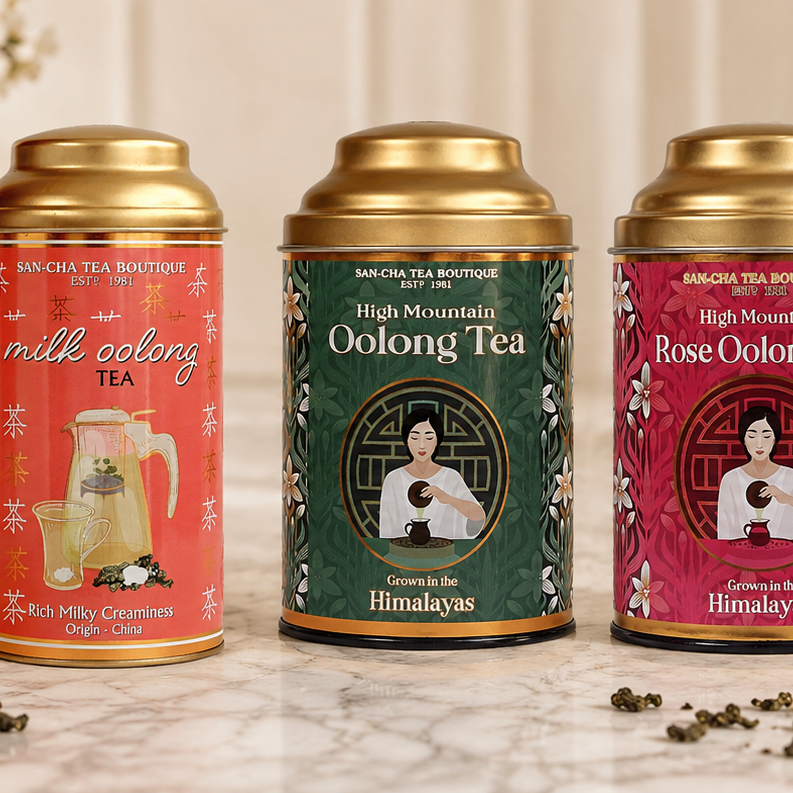
A floral and naturally calming Oolong, this is an elegant introduction to the category. It is also available as a starter kit with a mug and ceramic infuser.
Tie Guan Yin Oolong
Known as the Iron Goddess of Mercy, Tie Guan Yin is one of the best-known Chinese Oolong styles. SAN-CHA's version offers tea lovers the opportunity to explore this classic style.
Darjeeling Oolong
A limited-edition Himalayan harvest that brings the distinctive character of Darjeeling into the world of Oolong.
Jasmine Oolong
For those who love floral teas, Jasmine Oolong combines the complexity of Oolong with the fragrant character of jasmine.
Milk Oolong
Creamy and luxurious in character, Milk Oolong is an excellent choice for anyone looking for a softer, richer Oolong experience.
Peach & Pineapple Oolong
Oolong doesn't have to be serious or traditional.
SAN-CHA's fruity Oolongs introduce notes of peach and pineapple for a more playful and contemporary tea experience.
Mint Oolong
A refreshing combination of Himalayan Oolong with mint and lavender, ideal for tea drinkers who enjoy a more aromatic cup.
Rose Oolong
A luxurious floral interpretation of Oolong, bringing together the character of tea with the fragrance of rose.
Wu Yi Mountain Oolong
For those who prefer deeper and toastier flavours, Wu Yi Mountain Oolong offers a very different expression of the tea style.
From Light & Floral to Deep & Toasty
This is perhaps the best reason to explore Oolong.
You don't have to decide that you "like Oolong" based on one cup.
If you prefer delicate teas, try a floral Oolong.
If you enjoy creamy flavours, explore Milk Oolong.
If you love fruit-forward teas, Peach or Pineapple Oolong could be a better starting point.
And if your preference is for deeper, more roasted flavours, Wu Yi Mountain Oolong offers an entirely different experience.
Oolong is not one tea. It is a world of teas.
How to Brew Oolong Tea
Oolong is also wonderfully versatile when it comes to brewing.
For a standard cup, SAN-CHA recommends:
Tea: ½ teaspoon / approximately 1 g Oolong tea leaves per cup
Water: 85–90°C
Steeping time: Approximately 3 minutes
And don't throw the leaves away after one infusion.
Many Oolongs can be re-infused two or three times, increasing the infusion time by approximately one minute with each subsequent brew.
This allows you to experience how the flavour evolves from one infusion to the next.
A good Oolong can reveal new aromas and flavours each time you brew it.
Why Choose Loose-Leaf Oolong?
Loose-leaf tea gives the leaves room to expand during brewing.
This is particularly important with Oolong, where the leaves may be tightly rolled or twisted during processing.
As they unfurl in hot water, they release their aroma and flavour gradually.
It also makes the brewing process more interactive.
You aren't simply making a beverage.
You're watching the tea open.
You're smelling the changing aromas.
You're tasting how the infusion develops.
That is part of the pleasure of drinking Oolong.
Oolong for the Modern Tea Drinker
Oolong has traditionally been associated with Chinese tea culture and tea connoisseurs, but its appeal today is much broader.
It works beautifully for someone who wants:
- A sophisticated alternative to green tea
- A naturally caffeinated afternoon drink
- A low-calorie alternative to sugary beverages
- A tea to enjoy while focusing on wellness
- Something more complex than a standard black tea
- A versatile tea that can be brewed multiple times
- New flavours to explore
And with SAN-CHA's diverse collection, discovering the right Oolong becomes an enjoyable journey rather than a difficult choice.
A Cup of Oolong, A More Balanced Approach to Wellness
The growing interest in Oolong tea is understandable.
It brings together flavour, tradition and naturally occurring tea compounds in one beautiful cup.
Research suggests that tea compounds and caffeine may influence energy expenditure and fat oxidation, but the effects are generally modest, and Oolong should be viewed as one small part of an overall healthy lifestyle, rather than a shortcut to weight loss.
For SAN-CHA, that is exactly what makes Oolong so interesting.
It doesn't need exaggerated promises.
It has an incredible story of its own.
From the mountains of China to Himalayan tea gardens, from floral Tie Guan Yin to creamy Milk Oolong and fruity Peach Oolong, every cup offers another way to experience tea.
Explore Oolong for its flavour. Enjoy it for its ritual. And let it become part of a balanced approach to wellness.
Discover SAN-CHA's Oolong Tea Collection
With 14 Oolong teas and Oolong gift collections, SAN-CHA offers an extensive selection for both newcomers and experienced tea drinkers.
Whether you're looking for a floral, fruity, creamy, refreshing or roasted Oolong, discover your next cup at SAN-CHA Tea Boutique — India's artisanal tea destination since 1981.
